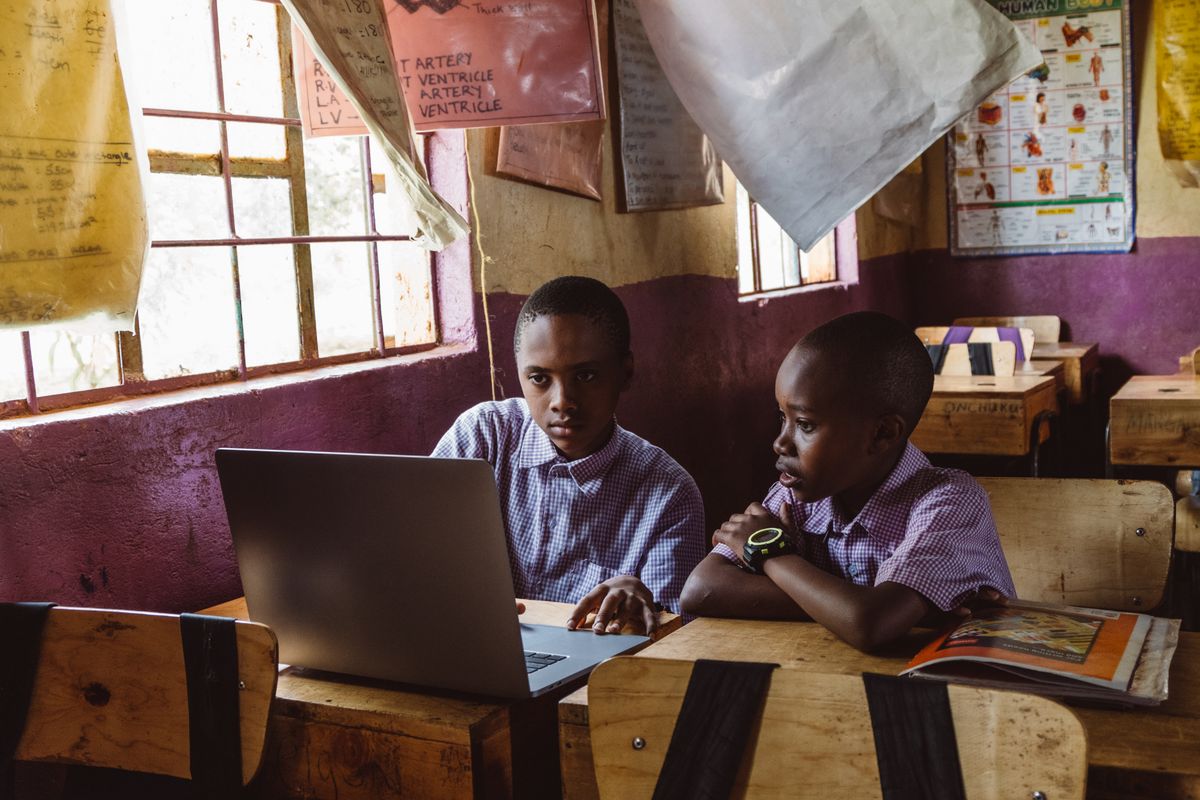
The Role of Publishing in Kenya's Education Sector
Education and publishing share a symbiotic relationship that runs deeper than most people realise. In Kenya, the connection is particularly vital. From the textbooks that shape the national curriculum to the magazines that celebrate the teaching profession, publishing is woven into the very fabric of how the country learns.
This piece explores the multiple ways publishing supports and is shaped by Kenya's education sector, and why the relationship matters more than ever.
The Textbook Ecosystem
Textbook publishing is the backbone of educational publishing worldwide, and Kenya is no exception. The Kenya Institute of Curriculum Development (KICD) approves textbooks for use in schools, and publishers compete for a place on the approved list a process that ensures quality while also creating an industry worth billions of shillings.
But the role of textbooks in Kenyan education goes beyond mere commercial opportunity. Effective textbooks are pedagogical tools. They scaffold learning, provide visual reinforcement, offer practice exercises, and give teachers a coherent structure for delivering the syllabus. In classrooms where access to digital resources is limited, the textbook remains the single most important learning resource.
The shift to the Competency-Based Curriculum (CBC) has reshaped this landscape dramatically. Unlike the old 8-4-4 system, which leaned heavily on memorisation and examination performance, CBC emphasises skills, values, and practical application. This requires a fundamentally different approach to textbook design: more activity-based, more visual, and less dense with text.
Publishers who have invested in CBC-aligned content are helping to shape how the new curriculum is actually experienced in classrooms. At the same time, the transition has highlighted gaps particularly in specialised subjects and in early-grade materials for mother-tongue instruction. These gaps represent both a challenge and an opportunity for the publishing industry.
Teacher Resource Materials
Textbooks serve students, but great teaching requires more than a student-facing book. Teachers need lesson plans, assessment tools, remedial materials, and professional development resources.
This is where specialised publishing, the kind we do at Global Village Publishers, intersects with education most directly. Teachers' Image magazine, now in its 35th volume, was created to address this need. Each issue combines inspirational stories of educators with practical classroom resources. A teacher in rural Kitui can read about a peer's successful CBC integration strategy and try it in their own classroom the following week.
Beyond the magazine, teacher resource materials subject guides, schemes of work, assessment banks represent an underserved market in Kenyan publishing. Many teachers rely on materials they have created themselves or shared informally with colleagues. Professionally produced, quality-controlled resources could significantly raise instructional quality, particularly in subjects like science and mathematics where conceptual understanding depends on clear explanation and effective demonstration.
The CBC Publishing Opportunity
The Competency-Based Curriculum represents the single most transformative shift in Kenyan educational publishing in a generation. Consider the scale: over 30,000 primary and secondary schools, more than 15 million learners, and a curriculum that requires entirely new learning materials.
For publishers, this means:
- New textbooks aligned to CBC learning outcomes across all subjects
- Teacher guides that explain the pedagogical approach and provide support lesson by lesson
- Assessment materials that measure competencies rather than memorised facts
- Supplementary readers that support literacy development across age groups
- Digital resources that complement print materials for schools with device access
The opportunity extends beyond conventional publishing. Coffee table books documenting school histories, for instance, have become increasingly popular as institutions celebrate milestones in their development. A school's centenary book is not just a commemorative item it is an educational resource that connects current students with their institution's heritage, building identity and continuity.
Commemorative Books as Educational Legacy
This last point deserves expansion. Over the years, Global Village Publishers has produced commemorative books for schools and educational institutions across Kenya from prestigious national schools to community-founded academies. These books do more than mark anniversaries.
A carefully produced school history book:
- Preserves institutional memory as founding staff retire and alumni disperse
- Inspires current students by showcasing the achievements of those who came before
- Documents educational evolution changes in curriculum, infrastructure, and educational philosophy over decades
- Serves as a fundraising tool by demonstrating the school's impact and legacy to potential donors and partners
- Builds community among alumni, staff, students, and parents
One of our most rewarding projects was documenting a primary school in Western Kenya that produced three Kenyan senators, two university vice-chancellors, and countless other professionals all from a humble campus that started under a tree in the 1960s. The book was not just a record; it was a declaration of pride and possibility for every current learner.
The Literacy Ecosystem
Publishing's role in education extends to the broader literacy ecosystem. Reading culture in Kenya has historically lagged behind other East African nations, but the picture is changing.
School libraries are being revived in many counties. Community reading programmes some sponsored by publishers, others by NGOs are getting books into the hands of children who have none at home. And the growth of Kenyan-authored content means that young readers can see themselves reflected in the stories they read.
Publishers contribute to this ecosystem in multiple ways:
- Producing affordable supplementary readers for early literacy programmes
- Donating books to school libraries and community reading schemes
- Training teachers in how to use books effectively in the classroom
- Supporting authors who write in local languages and for local contexts
- Creating reading schemes that scaffold literacy development from pre-primary through upper primary
The connection between publishing and literacy is mutually reinforcing: better access to books creates better readers, and better readers create demand for more and better books.
Teachers' Image: A Case Study in Education Publishing
Teachers' Image magazine represents a unique intersection of publishing and education. It is not a textbook, a teacher guide, or a school history yet it supports education at a deeper level by supporting educators themselves.
The magazine's model is simple but powerful: celebrate teachers, share their innovations, and connect them with resources and recognition. Over 35 volumes, it has become a fixture in Kenya's education landscape, distributed through TSC offices and directly to schools.
Teachers featured in the magazine report increased motivation, greater respect from their communities, and in some cases, career advancement opportunities that arose from the recognition. Principals tell us that having a staff member featured raises morale across the entire school.
This is publishing serving education not through curriculum content but through human dignity. It is a reminder that what happens in the classroom depends not just on materials but on the people who use them.
The Road Ahead
As Kenya's education system continues to evolve through CBC implementation, digital integration, and expanded access publishing will remain an essential partner. The formats may change (e-books, interactive digital resources, on-demand printing), but the fundamental role remains the same: connecting learners and educators with content that informs, inspires, and transforms.
At Global Village Publishers, we are committed to that mission. Whether through a textbook, a commemorative school history, or the pages of Teachers' Image magazine, we believe that thoughtful publications have the power to elevate Kenyan education.
Interested in how publishing can support your educational institution? From school history books to custom teacher resources, we would love to discuss your project.